
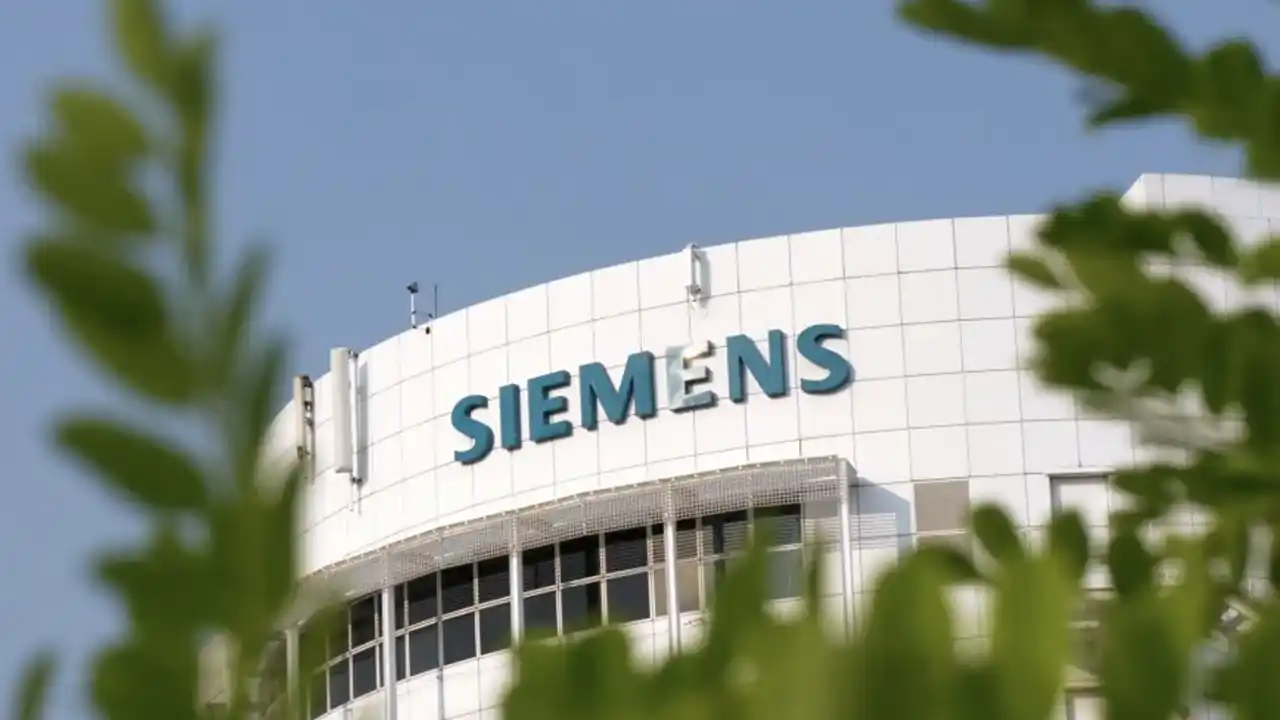
Before it became the multinational conglomerate corporation it is today, Siemens AG began as an installer and manufacturer of telegraphic systems in 1847 in Berlin, Germany. It started as a small business called Siemens & Halske with a business-minded war veteran and engineer named Werner Siemens and his business partner J.G. Halske. The firm advanced under the management of the Siemens family as technology did in the Industrial Revolution.
The German conglomerate now has its headquarters in Munich and Berlin. It trades with the ticker SIE on Xetra and the Frankfurt Stock Exchange. Some products and services include telecommunications equipment, home appliances, industrial and buildings automation, medical equipment, financing, and gas and steam turbines.
Founder and Origins of Siemens
Siemens AG began with Werner Siemens and J.G. Halske in 1847 in Berlin, Germany. At that time, Werner had finished his military career as an artillery officer for the Prussian army and had earned an electroplating patent as an engineer. Werner created Siemens & Halske (S&H) with his business partner to produce telegraphic systems. Their first commission was to build a telegraph link between Frankfurt and Berlin, occurring only a year after the company’s foundation.
Thanks to its early start in the telegraph industry, S&H’s business boomed in the following years. One major project was in 1853 to build a telegraph system in Russia. After the firm completed the commission, it set up a St. Petersburg office under Carl, Werner’s brother. After a few years, the S&H firm developed the first deep sea telegraphic cable, which led to the spin-off of its London office into an independent company headed by another brother, Wilhelm. Later, this spin-off company was renamed Siemens Brothers.
From 1867-1870, the Siemens Brothers worked on the 11,000-kilometer Indo-European telegraph line that ran from London, UK, to Calcutta, India. Similar projects followed this, launching the brothers’ company successfully. By 1874, the brand had enough to launch a cable-laying ship called the Faraday, co-designed by William Siemens. The ship’s first direct transatlantic cable project ran from Ireland to the United States.
Expansion During and Beyond the Industrial Revolution
After Alexander Graham Bell released the telephone to the market in 1877, Werner Siemens patented an improved version and immediately began production. In 1890, Werner retired, leaving his company to Carl and his sons, Arnold and Wilhelm, as a limited partnership. Even after Werner died two years later, the brand continued to prosper with a power station at Erding, Bavaria, and the founding of the S&H Electric Company subsidiary in Chicago, US.
Like the invention of the telephone, the launch of the X-ray in 1895 pushed S&H to create the first patent for an X-ray tube only one year later. Similar events continued as the 20th century rolled in. In 1909, it developed an automatic telephone exchange and installed it around Munich, servicing 2,500 clients.
Not long after, World War I broke out, forcing the company to shift its product of civilian electrical components to military communication devices plus other equipment. These included gun locks for rifles, explosives, and aircraft engines. A key input by S&H to the war effort was a fire control system for battle cruisers. In 1916, in the Battle of Jutland, a squadron of the High Seas Fleet fought against British battlecruisers. The German cruisers sank two British ships, giving the German navy a huge advantage with its more advanced gunnery equipment, making this battle a highlight for the Germans in WWI.
Another contribution constructed by the company was the Ardnacrusha Hydro Power Station, the first for its design in 1920. Its goal with the hydropower station was to raise the wages of underpaid workers in the then-Irish Free State. However, the dream didn’t come to fruition after the Cumann na nGaedheal government overruled it.
The problem with war was that it hurt the business in the long run. In 1915, the British government took over Siemens Brothers and sold it to British interests a year later. The Siemens family didn’t get the business back, but its new owners kept the brand name. After the Bolshevik government seized power in Russia in 1917, the brand’s St. Petersburg subsidiary also had assets of 50 million rubles (or just under $685,000 today).
The Third Reich brought immense expansion to the firms, collectively called the House of Siemens. During WWIII, the House ran all its plants at full capacity and had been dispersed throughout Germany to avoid air strikes. Almost of its 400 alternative or relocated manufacturing plants were operating from late 1944-early 1945. After WWII, 90% of its plants in Soviet-occupied Germany were seized while the Western powers destroyed its facilities.
In 1949, the company set up its new headquarters in Munich, and production of consumer electronics, railroad, telephone, power generating, and medical equipment resumed. The reorganization of the House of Siemens, run by Hermann von Siemens, led to its establishment of a New York subsidiary, Siemens Inc. It sold an electron microscope to the American market first.
With the expansion of modern scientific breakthroughs, the brand entered the fields of nuclear power and data processing in the mid-1950s. It released a mainframe computer in 1955 and opened its first nuclear reactor at Munich Garching in 1959. The brand made it to Mars in the 1960s with the development of a disc seal triode, which the space probe Mariner IV used in its transmitter. The firm provided a high-speed passenger train when the German Federal Railway came into service in 1965.
Ernst von Siemens reorganized the company in 1966 to bring all the brand’s subsidiaries under the parent company. It led to the reincorporation of the company as Siemens AG and a decade of prosperity. For example, the 1972 summer Olympic Games were held in Munich with Siemens as the official contractor of telecommunications and data processing equipment.
In the following decades, the company worked with other brands to establish itself in other markets. It also used its resources to acquire different subsidiaries. Even in the 21st century, the brand continued to buy, sell, and form joint ventures with other firms. These events established the Siemens brand in areas like gas, power, smart infrastructure, and financial services.
Going Public
The Siemens brand has had its shares publicly listed on the stock market since March 1899. It trades on the Frankfurt Stock Exchange (FWB) and Xetra with the ticker code SIE. It is also an important stock in the DAX40.
Siemens Acquisitions and Subsidiaries
In 1903, the company established a subsidiary dedicated to electric power engineering, Siemens Schuckertwerke GmbH (SSW). In 1932, Reiniger, Gebbert & Schall, and Phönix AG merged with the company, forming Siemens-Reiniger-Werke AG (SRW). This new firm produced medical therapeutic and diagnostic equipment, like X-ray machines. In 1966, S&H, SSW, and SRW merged, forming Siemens AG. In 1969, the company created Kraftwerk Union by pooling its nuclear power business with AEG.
The first digital telephone exchange by Siemens came out in 1980. In 1985, the company bought Allis Chalmer’s interest in the Siemens-Allis partnership, which was incorporated into the brand’s Energy and Automation division. This firm traded electrical control equipment. Three years later, Siemens Plessey was established, previously Plessey, the UK defense and technology company. Under the new management, the business focused on avionics, radar, and traffic control services.
Nixdorf Computer AG was also given the same branding in 1991, becoming Siemens Nixdorf Informationssysteme AG, which assembled personal computers. The company acquired the Tennessee-based Industrial Systems Division of Texas Instruments, Inc. It became the industrial automation arm of the brand before it was absorbed by this energy and automation division.
Many similar events occurred in the following decades, pushing the company brand out into other areas, like medical engineering, real-time data organization, wind energy, and more.
Dealing with COVID-19
The company experienced a short crash during the pandemic. In 2020, its revenue dipped to €55.2 million ($58.3 million) from €56.7 million ($59.9 million) in 2019. The net income for 2019 was €5.6 million ($5.9 million), which flopped to €4.2 million ($4.4 million) in 2020.
Since the pandemic started, it has provided aid funds reaching around $19 million. The money went to affected communities, the production of face shields, and other essential activities. The company also tackled the problems of working on-site by providing remote-work opportunities. It partnered with other companies to conduct hiring programs and more.
What It Offers Today
Siemens produces, sells, and provides various things in many areas. In building technology, its products include security, fire safety, building automation and control, energy and sustainability, HVAC products, and a digital building lifecycle. Its industrial automation arm offers industrial controls, software, operator control & monitoring systems, power supplies, automation systems, and more.
The brand’s Mobility arm portfolio includes rail, road, and intermodal services. The company sells consumer products like switches, socket outlets, home appliances, and electrical installation systems.
Other market-specific solutions include aerospace, solar, healthcare, battery manufacturing, tire manufacturing, and many more.
